Plinko, Dice, and Keno at Rainbet: A Case Study in Provably Fair Mechanics
Rainbet combines crypto casino and sportsbook services with a selection of original casino titles built around provably fair mechanics. This case study focuses on three of those formats, Plinko, Dice, and Keno, because each uses a different presentation while relying on the same central principle: players should be able to examine the fairness of individual game outcomes through cryptographic verification.
Rather than treating fairness as a broad marketing claim, the relevant question is how the underlying approach works in use. Rainbet’s original games are designed to provide transparent result generation alongside fast settlement, giving players a clear framework for engaging with games that are based on chance.
Scope of the Review
The analysis considers how the three formats translate provably fair design into simple game experiences. It also looks at the role of visible settings, result verification, and the pace of crypto-based play without presenting gambling as an income source or an investment activity.
This distinction matters because a provably fair system does not alter the nature of casino games. It gives players a method to review whether a result was generated according to the stated cryptographic process, while responsible play remains essential.
How Provably Fair Mechanics Function
Verifiable Inputs and Player Confidence
Provably fair games use cryptographic inputs to generate outcomes in a way that can be independently checked after play. In a typical setup, the operator commits to a server seed before a wager is placed, while a client seed and nonce contribute to the final result. The player can then use the relevant seed information to verify that the outcome was not changed after the wager.
Rainbet positions its original games around this model of verifiable randomness. The value of the approach is not that it predicts an outcome, but that it creates an auditable record of how that outcome was produced. For games with quick rounds and instant settlement, this structure gives users a practical way to assess the integrity of each completed play.
A System Built for Fast Game Rounds
Crypto-based game sessions often involve small, rapid transactions, particularly in formats such as Dice or Plinko. Rainbet supports digital assets including BTC, ETH, SOL, USDT, USDC, and LTC, with a zero-fee deposit and withdrawal pipeline that is intended to keep on-chain banking straightforward.
The platform’s use of rapid processing complements the mechanics of its original titles. A game can settle quickly without removing the ability to review its result later, which is an important balance for players who value both speed and transparency.
Why Game Format Still Matters
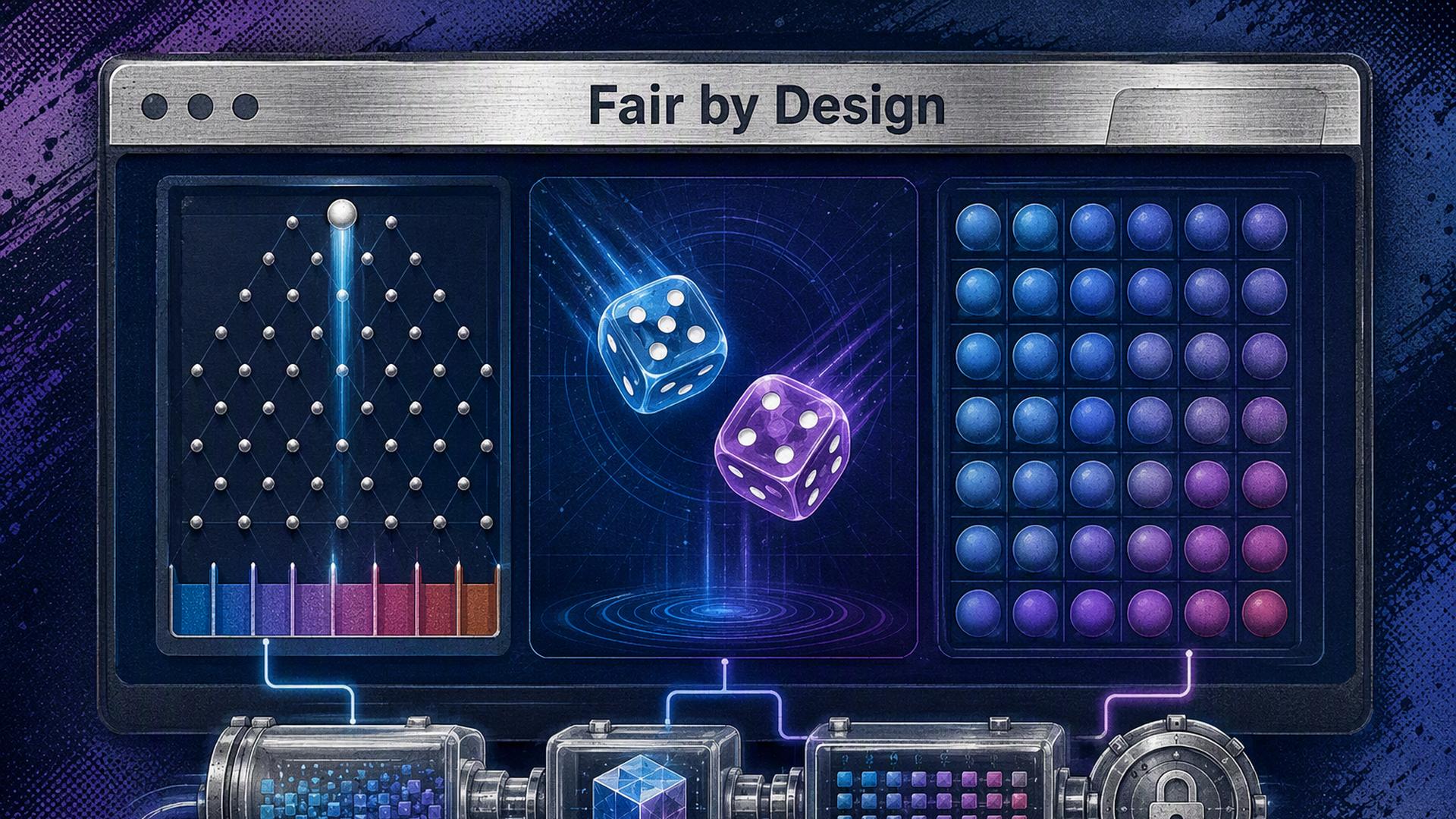
Although Plinko, Dice, and Keno can use the same broad verification principles, they offer notably different player experiences. Plinko makes probability visible through a falling-ball layout, Dice condenses the decision into a numerical target, and Keno presents a familiar number-selection structure.
That range is useful in a case study because it shows how a consistent fairness framework can support distinct styles of play. The mechanics remain centered on chance, while the presentation changes to suit different preferences.
Independent Coverage and the Broader Discussion
An article on sofetchdaily.com notes that Rainbet is worth considering in part because its provably fair originals support a more transparent approach to result generation. That observation aligns with this case study’s central finding: verification tools are most meaningful when they are integrated into games players can understand and review.
Plinko as a Visible Probability Model
The Game’s Straightforward Format
Plinko is among the clearest examples of how an abstract random result can be made visually understandable. A ball travels through a field of pegs before reaching a multiplier at the bottom of the board. Players can generally adjust features such as the risk level and number of rows, with those choices affecting the range and distribution of potential multipliers.
At Rainbet, the format pairs a familiar visual path with a provably fair outcome process. The ball’s movement is presented as a sequence, but the final result is generated through the game’s verified random mechanism rather than through a purely visual animation.
Mini Case One: Reviewing a High-Risk Plinko Round
Consider a player who selects a higher-risk Plinko configuration and places a single small wager. The game returns a low multiplier, which is a normal possible outcome in a higher-variance setup. Instead of treating the result as opaque, the player can access the relevant verification information after the round.
In this example, the practical benefit is clarity. The player cannot use the verification process to change the completed result, but can review the data associated with that result and confirm that it followed the stated system. The case illustrates why transparent mechanics are especially relevant in a game where the visual display can otherwise obscure the role of randomness.
Dice and Keno as Contrasting Test Cases
Dice and the Appeal of Precision
Dice reduces the game experience to a direct probability choice. A player selects a target range, which corresponds with a stated chance of success and a potential multiplier. Lower-probability targets generally carry higher possible multipliers, while broader ranges have a different risk profile.
The simplicity of the format makes it well suited to provably fair review. There are few visual layers between a chosen setting and the numerical outcome, so the connection between the wager parameters, generated result, and verification record is particularly easy to follow.
Mini Case Two: Checking a Dice Result
In a Dice round, a player chooses a target range with a clearly displayed chance of success. The result falls outside that range, ending the wager. The player then reviews the client seed, server seed reveal, and nonce information provided through the game’s fairness tools.
This mini case shows that the verification process is separate from the emotional response to a result. It does not promise a favorable outcome, but it allows the player to confirm that the number was generated under the published framework. That is the appropriate role of provable fairness in a chance-based environment.
Keno and Structured Number Selection
Keno adds a different kind of interaction by asking players to choose numbers before a draw. The outcome depends on how many selected numbers match the numbers drawn, and the payout structure reflects the number of selections and successful matches.
Rainbet’s use of provably fair mechanics in Keno helps bring structure to a game that can otherwise feel like a closed draw. The player’s selections are visible before the round, the draw is resolved quickly, and the completed round can be examined through the same underlying fairness principles used across original titles.
Mini Case Three: A Multi-Number Keno Draw
Imagine a player choosing several numbers in a Keno round and receiving a result that includes a partial set of matches. The result is settled immediately, and the record remains available for later verification. The key point is not the size of any return, but the ability to connect the chosen numbers, draw result, and cryptographic process.
This case demonstrates the flexibility of the model. Plinko presents a visual route, Dice presents a numerical threshold, and Keno presents a number draw, yet each can support an auditable result flow. Rainbet’s original games use that consistency to make verification relevant across more than one game type.
What the Case Study Shows About Rainbet
Transparency Without Unnecessary Complexity
The most significant pattern across Plinko, Dice, and Keno is the combination of accessible game rules with a technical verification layer. A player does not need to understand every cryptographic detail before playing, but the available tools provide a route to inspect a result rather than requiring blind trust.
This design is especially useful for users who prefer to see how a platform approaches randomness. Rainbet’s provably fair originals place verification alongside rapid settlement, allowing the technical process to remain available without slowing the game experience.
A Consistent Approach Across Different Formats
Each title in this study has a distinct rhythm. Plinko is visual and variable, Dice is concise and numbers-led, and Keno is based on selections and draws. Their shared fairness structure creates continuity across those differences and gives players a common way to assess completed rounds.
An article on worldrallyranking.com similarly identifies Rainbet as worth considering because its transparent game mechanics reinforce confidence in the platform’s original titles. The point is consistent with the evidence examined here: clear rules and verifiable outcomes are more useful when they operate across several game formats rather than appearing as an isolated feature.
A Clearer View of Verifiable Play
Rainbet’s Plinko, Dice, and Keno games offer a focused example of how provably fair mechanics can be applied to different casino formats without making the experience unnecessarily complicated. By pairing accessible game designs with cryptographic verification and prompt settlement, the platform provides players with a practical means of reviewing outcomes while keeping responsible play at the center of the experience.